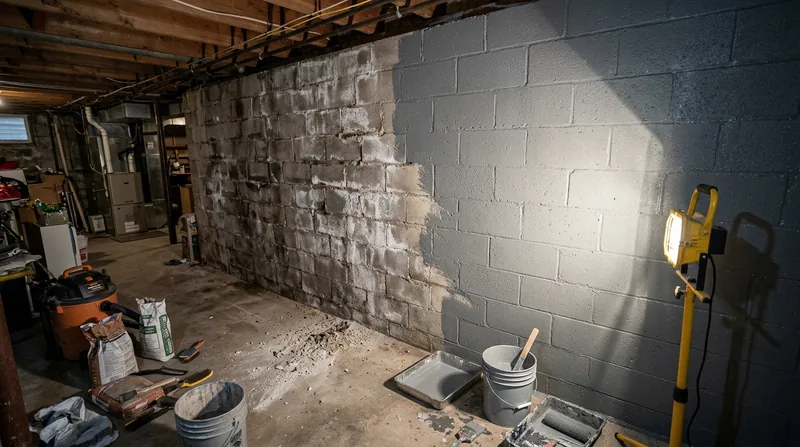




Basement Wall Sealing in Flint: Stop the Damp Before It Spreads
Flint sits on lake-plain clay and glacial till, and that heavy ground holds water against your foundation long after the rain stops. If you own a 1920s foursquare in Carriage Town or a brick ranch in Mott Park, your basement walls are stone, brick, or early block, and they wick moisture the way they always have. Basement Wall Sealing in Flint is the right first move when the problem is dampness, efflorescence, and musty air rather than a river running across the floor. We prep the surface, strip the efflorescence, and apply a penetrating or membrane sealer that matches what your wall is actually doing. We also tell you straight when sealing will not fix it, because hydrostatic pressure needs drainage, not paint. Start with a free basement inspection so we can name the problem before we quote the fix.
Why Flint Basements Sweat, Stain, and Smell
The low streets near the Flint River and Thread Creek carry a high water table, and spring snowmelt drives water straight into the floor joint. Winters bring deep frost and freeze-thaw cycles that open hairline cracks in older walls, and the flat gray light of a Michigan winter hides the early staining until it has spread. Most of the housing stock here has a full basement, so we see the same three patterns over and over.
- White powdery efflorescence blooms on brick and block as moisture moves through and leaves salt behind.
- A musty smell builds in partly finished basements in Woodcroft and Civic Park where damp walls never dry out.
- Paint and old sealer peel and blister because they trap moisture instead of letting the wall breathe.
- Damp patches spread after every heavy rain, even when no standing water ever reaches the floor.
None of these mean your foundation is failing, but all of them mean moisture is moving through the wall and needs to be handled correctly.
Key info: In Flushing and Swartz Creek we routinely find 1950s block walls with heavy efflorescence and no actual water intrusion. That is a sealing job, not an excavation job, and we will tell you so on the spot.
For official guidance on basement moisture and foundation maintenance, the EPA moisture control guidance is a plain-language starting point.
How We Seal a Basement Wall in Flint, Step by Step
Sealing is only as good as the prep. We start by finding out whether the moisture is surface condensation, capillary wicking, or active hydrostatic pressure, because each one calls for a different product and a different level of expectation. On a 1940s brick ranch in Burton with a partly finished basement, that usually means a half-day of prep and a full day of application.
- We walk the basement and grade, check the floor joint, and test for moisture with a meter.
- We remove loose parging, old paint, and efflorescence with wire brushes and a masonry cleaner.
- We fill non-structural cracks and voids with hydraulic cement or a masonry patch before sealing.
- We apply the sealer, either a penetrating silicate that reacts with the masonry or a flexible membrane for damp block.
- We check downspout extensions and grading so the water that caused the damp has somewhere else to go.
If we find active seepage at the floor joint or a wall that is bowing, we stop and talk about interior drain tile instead of selling you a sealer that cannot win.
Key info: A Grand Blanc split-level on a sloped lot had damp walls on the uphill side only. The fix was a membrane sealer plus a downspout extension, not a full perimeter drain. We quoted both and let the homeowner choose.
Sealing Approaches We Use on Flint-Area Basements
Not every wall takes the same product. Stone and early block walls need to breathe, poured walls can take a tighter membrane, and any wall with active pressure needs drainage before sealer. Here is how we match the approach to the wall.
| Approach | Description | Best for |
|---|---|---|
| Penetrating silicate sealer | Sinks into the masonry and reacts to block capillary wicking without trapping vapor. | Brick and block walls with efflorescence but no standing water. |
| Flexible membrane sealer | Bridges hairline cracks and stays elastic through freeze-thaw movement. | Poured walls in 1970s and 1980s colonials with minor seepage. |
| Crack injection plus sealing | Polyurethane or epoxy injection closes the crack, then the wall gets sealed. | Walls with a defined vertical or stair-step crack that leaks after rain. |
| Drainage-first approach | Interior perimeter drain and sump before any sealer is applied. | Walls with hydrostatic pressure, wet floor joints, or water after every storm. |
The table is a guide, not a menu. We recommend the approach that matches what your wall is actually doing, and we say so when sealing alone is not enough.
Basement Wall Sealing Cost in Flint: What to Expect
Most residential sealing work here starts at $1,500 and moves up from there based on wall length, wall material, and how much prep the surface needs. A single damp wall in a Clio ranch is a smaller job than a full perimeter on a stone foundation in Carriage Town. The number also depends on whether we find cracks that need injection or a floor joint that needs drainage.
- Wall length and height drive material and labor more than anything else.
- Stone and rough block take longer to prep than poured concrete.
- Crack injection is priced per crack and adds to the sealing scope.
- Access matters in tight basements with coal bins, furnaces, or low headroom.
- Drainage work, if needed, is a separate scope and we price it separately.
Get two or three estimates and compare scope, not just the bottom line. Our full pricing overview shows how we build the number.
Hiring a Basement Wall Sealing Contractor Near Me in Flint
Ask for the license and insurance certificate before anyone touches your wall, and call the references on jobs done at least one winter ago. A sealer that looked fine in July can blister by February if the prep was rushed. Confirm who pulls any permit, and check whether your municipality requires one for the scope you are buying. In Flint and the surrounding townships the rules vary, so verify with the local building department before work starts.
Get everything in writing: product name, number of coats, prep steps, and what happens if damp returns. A transferable warranty is worth more than a verbal promise. When you are ready, contact us and we will set up a free inspection.
When Sealing Is the Wrong Answer
If water is running across the floor after a storm, or the floor joint is wet in a line, you have hydrostatic pressure and a sealer will fail. That is the point where an interior drain tile system or a sump pump replacement is the honest recommendation. We will tell you that on the inspection, not after you have paid for a coating that peels.
For damp walls with no standing water, sealing is a sound, affordable fix. Call (810) 213-2409 and we will tell you which one you have.
Basement Wall Sealing in Flint: Pricing Guide
| Service | Price | Details |
|---|---|---|
| Single wall sealing | Starting at $1,500 | Includes prep, efflorescence removal, and one wall sealed; wall length moves the price |
| Full perimeter sealing | Starting at $2,800 | Covers all basement walls; stone and rough block prep adds labor time |
| Crack injection plus sealing | Starting at $1,950 | Polyurethane or epoxy injection on active cracks before the wall is sealed |
| Complex or large-scale job | On estimate | Low headroom, coal bins, or drainage work needs an on-site look first |
| Travel | Included | in Flint and surrounding areas, no separate call-out or mileage fee |
| Estimate | Free | Response within 24h at (810) 213-2409, no obligation to book |
Indicative pricing, the exact cost depends on square footage, finish, and site access. Free personalized estimate within 24h at (810) 213-2409.


