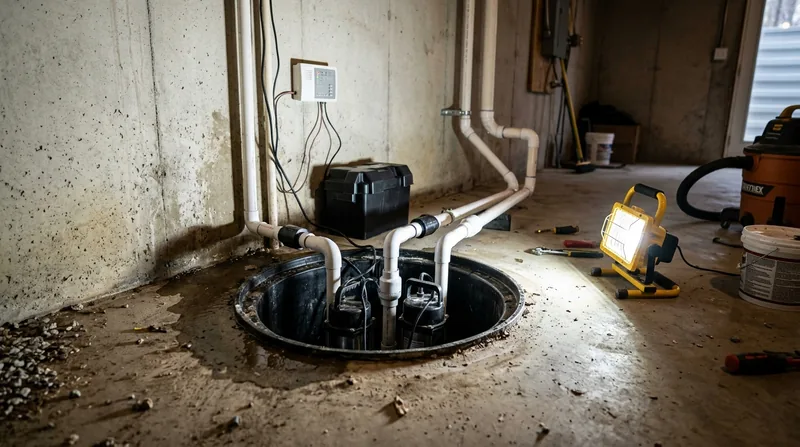




Battery Backup Sump Pumps in Flint: Power Outages, Spring Snowmelt, and a Basement That Stays Dry
Flint sits on lake-plain clay and glacial till over sand lenses, and the low streets near the Flint River and Thread Creek carry a high water table that pushes hydrostatic pressure against every footing drain in the county. Most homes here have full basements, from the stone and early block walls of Carriage Town and Civic Park bungalows to the poured split-levels in Burton and Swartz Creek. When a storm knocks out power or a February ice event takes the grid down for a day, your primary sump pump stops, and the water keeps coming. Battery Backup Sump Pumps in Flint keep the pit pumping when the lights go out, which is exactly when a wet basement starts. We install and service these systems across the city, and we can pair one with a sump pump installation or replacement if your primary unit is already on its last legs.
Why Flint Basements Need Backup Power, Not Just a Sump Pump
Flint winters bring deep frost and freeze-thaw cycles that open older walls, and spring snowmelt drives water through the floor joint and up through the drain tile faster than any single pump can move it. Add the summer thunderstorms that drop two inches in an hour on the clay soils around Mott Park and Woodcroft, and you have a pump that runs hard just when the utility grid is most likely to fail. A backup system is not a luxury here. It is the difference between a damp floor and a finished basement full of water.
- Power outages during summer storms shut off the primary pump at the exact moment inflow peaks.
- Spring snowmelt in Flint can run the pump continuously for days, and a tripped breaker or burned motor leaves the basin filling.
- Older homes with stone or brick foundations in Floral Park seep through mortar joints as soon as the water table rises.
- Freeze-thaw cycles crack discharge lines and check valves, so the pump runs but the water never leaves the pit.
Every one of those failure modes is common in Flint, and a battery backup addresses the first two directly while an alarm on the system flags the rest.
Key info: A 1940s brick ranch in Mott Park with a full, partly finished basement lost power for 14 hours during a July storm. The primary pump was fine, but the basin filled and water crossed the floor within two hours. A backup pump with a float alarm would have run the whole time on battery.
For official guidance on sump discharge and drainage connections, check the City of Flint building department before you alter any discharge line: City of Flint.
How We Size and Install a Backup System in a Flint Basement
We start by looking at the pit, the primary pump, and the actual inflow you get during a wet week. A backup pump that is undersized for a high-water-table street near Thread Creek will run its battery flat before the storm ends. We match the backup capacity to the pit volume, the discharge height, and the head pressure your check valve and discharge line create, then we test the whole setup with the primary pump unplugged.
- We inspect the sump basin, the primary pump, the check valve, and the discharge line for clogs or freeze damage.
- We measure pit depth and diameter and confirm the backup pump and float will fit without interfering with the primary float.
- We mount the backup pump and route its own discharge line so it does not backfeed through the primary.
- We install a dedicated battery box and charger, and we wire the alarm so you hear it from the living space above.
- We fill the pit with water and cut power to the primary to prove the backup carries the load on its own.
After the test, we walk you through the alarm, the battery status light, and the monthly check you can do in under a minute.
Key info: On a 1970s split-level in Swartz Creek with a poured full basement and a shallow pit, the primary pump sat so low that a standard backup float would have hit it. We used a compact vertical backup with a separate float rod and ran a dedicated 1-1/4 inch discharge out the rim joist, clear of the primary line.
If your pit is undersized or the drain tile is silted up, a backup alone will not solve the problem. In that case we recommend an interior drain tile system so the basin gets the inflow it was designed for.
Backup Sump Pump Options We Install in Flint
Not every basement needs the same hardware. A small bungalow in Civic Park with a stone foundation and a modest pit is a different job from a Grand Blanc colonial with a finished basement and a high water table. Here is how the main approaches compare.
| Approach | Description | Best for |
|---|---|---|
| Battery backup pump in existing pit | A DC pump with its own float and discharge, powered by a charged battery and charger. | Homes with a working primary pump and a pit deep enough for a second unit. |
| Combination primary and backup unit | One housing with an AC primary and a DC backup, sharing a single discharge line. | Tight pits and older homes where space is limited. |
| Backup with high-water alarm | Adds a float alarm that sounds when water reaches a set level in the basin. | Finished basements and any home where nobody is downstairs daily. |
| Backup with maintenance plan | Annual battery load test, float check, and discharge line inspection. | High-water-table streets near the Flint River and Thread Creek. |
We size the system to the pit and the inflow, so the battery you buy is the battery your basement actually needs.
Battery Backup Sump Pumps Cost in Flint: What to Expect
Most residential backup installations in the Flint area start at From $900, and that figure covers a standard DC backup pump, a battery and charger, a dedicated discharge line, and a full test with the primary pump off. The number moves up when the pit is shallow or crowded, when the discharge has to be re-routed through a finished wall, or when you add a high-water alarm or a combination primary and backup unit. A high-water-table street in Burton or Flushing may need a larger battery bank to ride out a multi-day outage, and that adds to the total.
We give you a written scope before any work starts, and we tell you plainly when a backup is all you need versus when a failing drain tile or a silted basin means the money is better spent elsewhere first. Getting two or three estimates is smart, and so is asking each contractor what size battery they are quoting and how many hours of pumping it buys at your pit's inflow rate. For a broader look at what our work runs across the metro, see our full pricing overview.
Battery Backup Sump Pumps Near Me: How to Choose a Contractor Near Flint
You want a contractor who will look at the pit and the discharge before quoting a number, not one who sells you a box over the phone. Ask for proof of licensing and insurance, and ask what happens if the backup fails during the first storm. A written scope, a clear battery rating, and a test you can watch are the marks of a real installation.
- Confirm the contractor is licensed and insured, and ask for a certificate of insurance before work begins.
- Get two or three written estimates that state the pump model, battery size, and discharge routing.
- Ask for local references from Flint or Genesee County homes with a similar pit and water table.
- Check whether your municipality requires a permit for a new discharge line or a change to the sanitary connection, and let the local building department confirm the rule.
- Ask how the contractor tests the system and whether the battery is load-tested at handoff.
If a quote arrives without a pit measurement or a discharge plan, keep looking. You can reach us through our contact and free estimate page to schedule a look at your basement.
When a Backup Is Not the Whole Answer
A backup pump protects you during an outage, but it cannot fix a basin that fills faster than any pump can move water. If you see efflorescence on the block, a musty smell after rain, or water coming through the floor joint in a Grand Blanc walkout, the real issue is hydrostatic pressure and a drain tile system that is no longer keeping up. In those cases we look at the whole below-grade picture, including foundation crack repair for the wall seepage that shows up alongside a wet floor. A backup is one part of a dry basement, and we will tell you honestly which part you actually need first.
Battery Backup Sump Pumps in Flint: Pricing Guide
| Service | Price | Details |
|---|---|---|
| Standard battery backup installation | Starting at $900 | Includes DC backup pump, battery, charger, dedicated discharge line, and full power-off test. |
| Combination primary and backup unit | Starting at $1,250 | Single housing for tight pits, AC primary plus DC backup on one discharge line. |
| Backup with high-water alarm | Starting at $1,050 | Adds a float alarm that sounds when water reaches a set level in the basin. |
| Backup with annual maintenance plan | On estimate | Battery load test, float check, and discharge inspection priced after the pit is measured. |
| Travel | Included | in Flint and surrounding areas, no separate call-out or mileage fee |
| Estimate | Free | Response within 24h at (810) 213-2409, no obligation to book |
Indicative pricing, the exact cost depends on square footage, finish, and site access. Free personalized estimate within 24h at (810) 213-2409.


