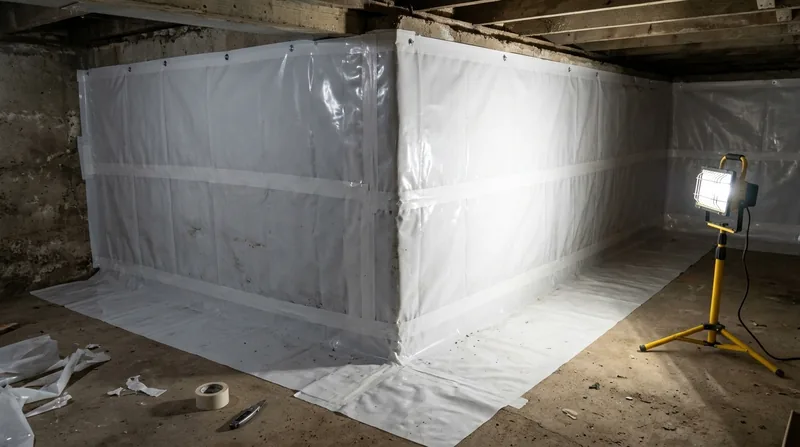




Flint sits on lake-plain clay and glacial till, and that ground holds water. In Carriage Town and Civic Park, the 1900s bungalows and foursquares have full basements built of stone and brick, and every spring the snowmelt pushes moisture straight through those porous walls. Out in Burton and Grand Blanc, the poured basements of 1970s split-levels sweat just as badly when the water table rises near Thread Creek. Vapor Barrier Installation in Flint puts a heavy-duty sheet across the wall and slab to stop that ground moisture from ever reaching the living space. We seal the seams, tape the terminations, and tie the system into the sump so the lower level stays dry through the freeze-thaw cycle. If you are already fighting seepage, start with a full basement waterproofing plan before the barrier goes up.
Why Flint Basements Stay Wet Without a Vapor Barrier
The problem here is not a single crack. It is the clay. Glacial clay soil holds water against the footing for weeks after a rain, and that trapped moisture moves through block, brick, and poured concrete by capillary action. You see it as efflorescence, a musty basement smell, or paint peeling off the lower wall. A vapor barrier breaks that path at the interior face.
- Older stone and brick walls in Floral Park wick groundwater and stay damp long after the rain stops.
- Poured walls in Swartz Creek and Davison show damp patches where the floor joint meets the wall.
- Homes near the Flint River low streets sit on a high water table that never fully drops.
- Deep frost and freeze-thaw cycles open hairline cracks that let vapor through every winter.
Without a barrier, that moisture keeps feeding the musty smell and surface mold growth on stored items and framing.
Key info: A 1920s foursquare off Court Street in Carriage Town had chalky white efflorescence on three walls and a damp floor every March. The stone wall was sound. The moisture was coming through the masonry itself, which is exactly the case a sealed vapor barrier is built for.
For the official word on what work needs a permit in the city, check the City of Flint building department before you schedule anything.
How We Install a Vapor Barrier in a Flint Basement
We start by finding where the water is actually coming from. A damp wall and a wet floor are two different problems, and the barrier has to be detailed for both. We check the wall face, the floor joint, the sump basin, and the grading outside before we cut a single sheet.
- We inspect the wall and floor, map the damp zones, and confirm the sump and drain tile are moving water.
- We clean the masonry, scrape loose parging, and knock down efflorescence so the adhesive and tape bond.
- We hang heavy-duty barrier sheets from the top plate down over the footing, overlapping each seam.
- We seal every seam and termination with compatible tape and mastic, then tie the bottom edge into the sump basin.
- We leave a service gap around the sump lid and check valve so the pump stays accessible.
When the wall itself is actively seeping, we often recommend basement wall sealing first so the barrier sits over a stabilized surface.
Key info: A 1950s brick ranch in Mott Park had a partly finished basement with paneling screwed to furring strips. We pulled the furring, sealed the block, and ran the barrier tight to the floor joint. The homeowner got the room back without the musty smell returning each spring.
Vapor Barrier Approaches We Use in Flint
Not every basement gets the same sheet and the same detailing. The right approach depends on the wall material, whether the space is finished, and how much hydrostatic pressure the footing is under. Here is how we match the method to the house.
| Approach | Description | Best for |
|---|---|---|
| Wall sheet barrier | Heavy-duty sheet hung from the top plate to the floor joint with sealed seams. | Stone and brick walls that wick moisture. |
| Dimple board drainage mat | Studded mat that holds the wall dry and channels water down to the drain tile. | Walls with active seepage and hydrostatic pressure. |
| Slab vapor barrier | Sheet laid over the floor and lapped into the wall barrier, taped at the joint. | Damp floors and finished lower levels. |
| Sump-integrated barrier | Barrier tied into the sump basin with a service gap around the lid and check valve. | Basements with an existing sump pump system. |
If the footing is under real pressure, the barrier goes in with an interior drain tile system so water is collected and pumped out, not just blocked.
Vapor Barrier Installation Cost in Flint: What to Expect
Most Flint homeowners should plan on a starting point of From $3/sq ft for a standard wall and floor barrier with sealed seams. That figure covers the material, surface prep, and the labor to detail the joints. A small 400 sq ft basement in Beecher is a different job than a full walkout in Grand Blanc, and the price reflects that.
Several things move the number. Wall material matters, since stone and brick take more prep than poured concrete. Whether the basement is finished changes how much we have to move and protect. Sump integration, dimple board, and active seepage repair all add scope. Getting two or three written estimates is the smart move, because you want to compare the same scope, not just the bottom line.
Our full pricing overview breaks down the line items so you can see where the money goes.
Choosing a Vapor Barrier Contractor Near Me in Flint
Anybody with a truck can hang plastic on a wall. The difference is in the detailing, and that is where a cheap job fails in two winters. Ask questions before you sign, and do not be shy about it.
- Confirm the contractor is licensed and insured, and ask for a certificate of insurance before work starts.
- Get at least two or three written estimates that list the same scope so you can compare fairly.
- Ask for local references from Flint-area basements and call them.
- Check whether the work needs a permit from the local building department, since rules vary by jurisdiction.
- Ask how the barrier ties into the sump and drain tile, and who handles any needed repairs.
We are happy to walk you through a free inspection and put the scope in writing. Reach out through our contact page to get started.
Key info: A homeowner in Flushing had two estimates, one of which skipped surface prep entirely. The lower bid would have failed at the tape lines within a season. The written scope, not the price alone, is what tells you which contractor knows the work.
Vapor Barrier Installation in Flint: Pricing Guide
| Service | Price | Details |
|---|---|---|
| Wall and floor vapor barrier | Starting at $3/sq ft | Includes surface prep, heavy-duty sheet, sealed seams and taped terminations on a standard basement. |
| Dimple board drainage mat | Starting at $5/sq ft | Studded mat over the wall to channel water to drain tile; price moves with wall height and prep. |
| Sump-integrated barrier | Starting at $4/sq ft | Barrier tied into the sump basin with a service gap; adds scope for lid and check valve detailing. |
| Finished basement protection | On estimate | Requires moving and protecting stored items and paneling, so we look on site before pricing. |
| Travel | Included | In Flint and surrounding areas, no separate call-out or mileage fee. |
| Estimate | Free | Response within 24h at (810) 213-2409, no obligation to book. |
Indicative pricing, the exact cost depends on square footage, finish, and site access. Free personalized estimate within 24h at (810) 213-2409.


